Why Domain Expertise Matters More Than Ever in AI
As AI models become more capable, the need for specialised domain knowledge in training becomes critical.
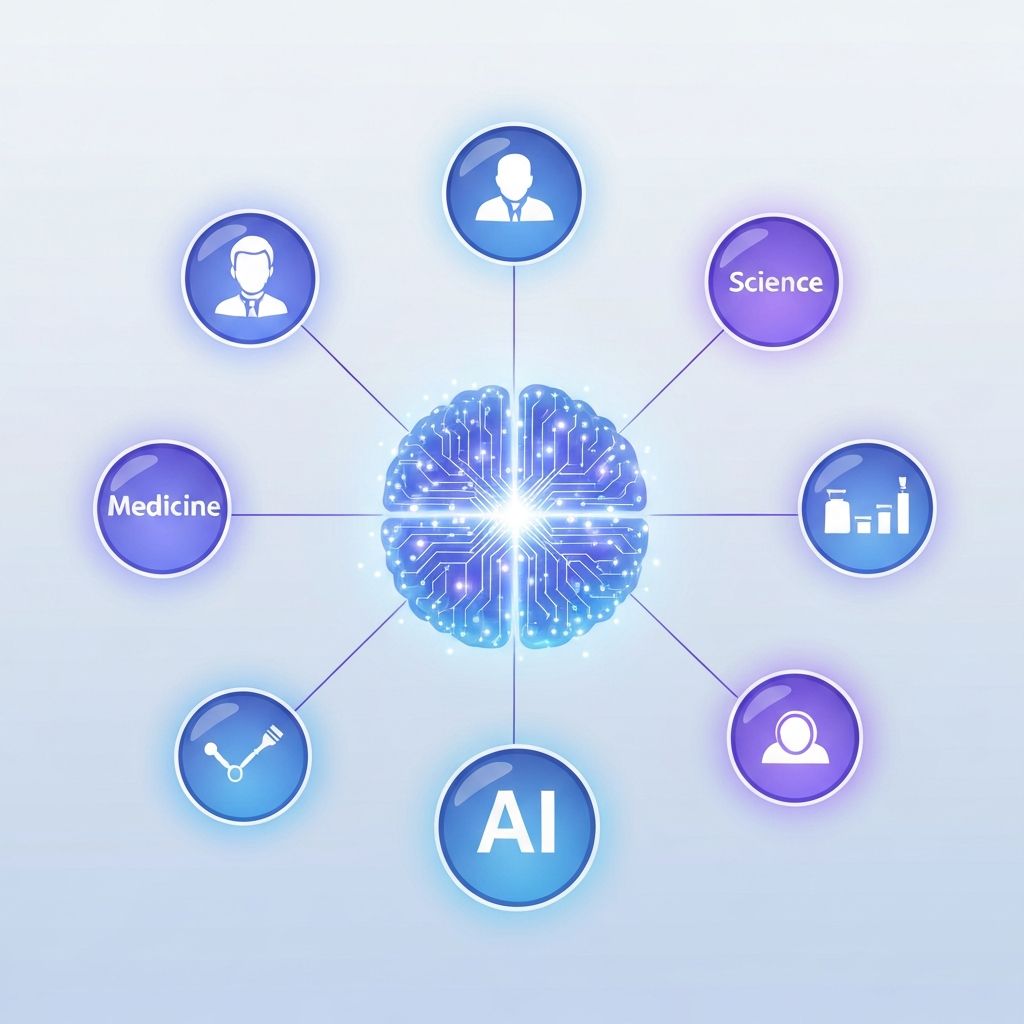
There is a widespread assumption in the AI industry that as models become larger and more capable, the need for human expertise diminishes. The reasoning goes: if a model can already write code, summarise legal documents, and explain quantum physics, why would we need human experts to train it further?
This assumption is not just wrong; it is dangerously backwards. As models become more capable, the bar for what constitutes useful training feedback rises proportionally. And meeting that bar increasingly requires deep, genuine domain expertise.
The Expertise Paradox
Early language models made obvious errors that almost anyone could identify. A model that generated grammatically broken text or factually absurd statements could be corrected by a general-purpose annotator with basic training. The feedback was straightforward: this output is clearly wrong, and here is a clearly better alternative.
Modern frontier models rarely make these kinds of obvious errors. Instead, their failures are subtle: a legal analysis that is structurally sound but misapplies a specific precedent; a medical explanation that is mostly correct but omits a critical contraindication; a code snippet that compiles and runs but introduces a subtle security vulnerability. Identifying and correcting these errors requires someone who deeply understands the domain.
This is the expertise paradox: the better models get, the more expertise is required to make them better still.
Where Domain Expertise Makes the Difference
Domain expertise impacts AI training across several critical dimensions:
Factual Accuracy
Models frequently generate plausible-sounding but factually incorrect information, a phenomenon often called hallucination. Detecting hallucinations in specialised fields requires someone who knows the ground truth. A cardiologist can spot a subtly incorrect drug interaction that would pass unnoticed by a general annotator. A senior software architect can identify an API pattern that will cause production failures under specific conditions.
Nuanced Reasoning
Many real-world problems do not have single correct answers. They require weighing trade-offs, considering context, and applying professional judgement. Training models to handle these situations well requires feedback from people who have actually made these kinds of decisions. A financial analyst providing preference data on investment advice brings a lifetime of context that no annotation guideline can fully capture.
Safety and Harm Prevention
Domain experts play a critical role in identifying potential harms that are invisible to non-specialists. A clinical psychologist can identify when a model's response to a mental health query could be harmful, even if it appears helpful to a layperson. A cybersecurity expert can recognise when a model is providing information that could be exploited, even if the response is technically accurate.
Quality Calibration
Perhaps most importantly, domain experts can calibrate what "good" looks like in their field. The difference between an adequate explanation and an excellent one is often only apparent to someone with deep expertise. When training models to produce expert-level output, only experts can reliably judge whether that standard has been met.
The Challenge of Access
If domain expertise is so valuable for AI training, why is it not universally used? The answer is primarily one of access and logistics. PhD-level researchers, senior professionals, and certified specialists are busy, expensive, and difficult to manage through traditional annotation workflows. They are not accustomed to working on micro-tasks and often require different engagement models than typical crowd-sourced workers.
This is precisely the problem that talent operating systems like Hytne are designed to solve. By creating dedicated infrastructure for sourcing, vetting, and engaging domain experts in AI training workflows, these platforms make expert-level feedback accessible and scalable.
Looking Forward
As AI systems are deployed in increasingly high-stakes domains including healthcare, law, finance, and critical infrastructure, the importance of domain expertise in training will only grow. Organisations that build robust relationships with domain experts and integrate their knowledge into training pipelines will produce models that are safer, more accurate, and more commercially valuable. Those that treat training feedback as a commodity to be sourced at the lowest cost will find their models plateauing, or worse, generating costly errors.
Need domain experts for your AI training?
Hytne connects you with PhD-level specialists across dozens of verticals.
Request a Demo